Gray whales are back in the news this year, for two reasons. In July, NOAA Fisheries published a new estimate of the Eastern North Pacific gray whale population. It came to about 17,750 whales, up from roughly 12,890 the year before. The last full season summary from the volunteers who count gray whales on the back patio of the Point Vicente Interpretive Center covers December 2024 through May 2025. That season had the lowest totals and the lowest calf numbers in the project's history. One figure is a modeled estimate for the whole population. The other is a count of the whales that passed close to one Rancho Palos Verdes cliff, and both are worth following this winter.
The American Cetacean Society's Los Angeles chapter, ACS/LA, runs its Gray Whale Census and Behavior Project from December 1 through late May, during daylight hours. If that schedule holds, the next season begins less than two weeks after this post goes up. That makes this winter's count a good one to follow.
What the patio counted last time
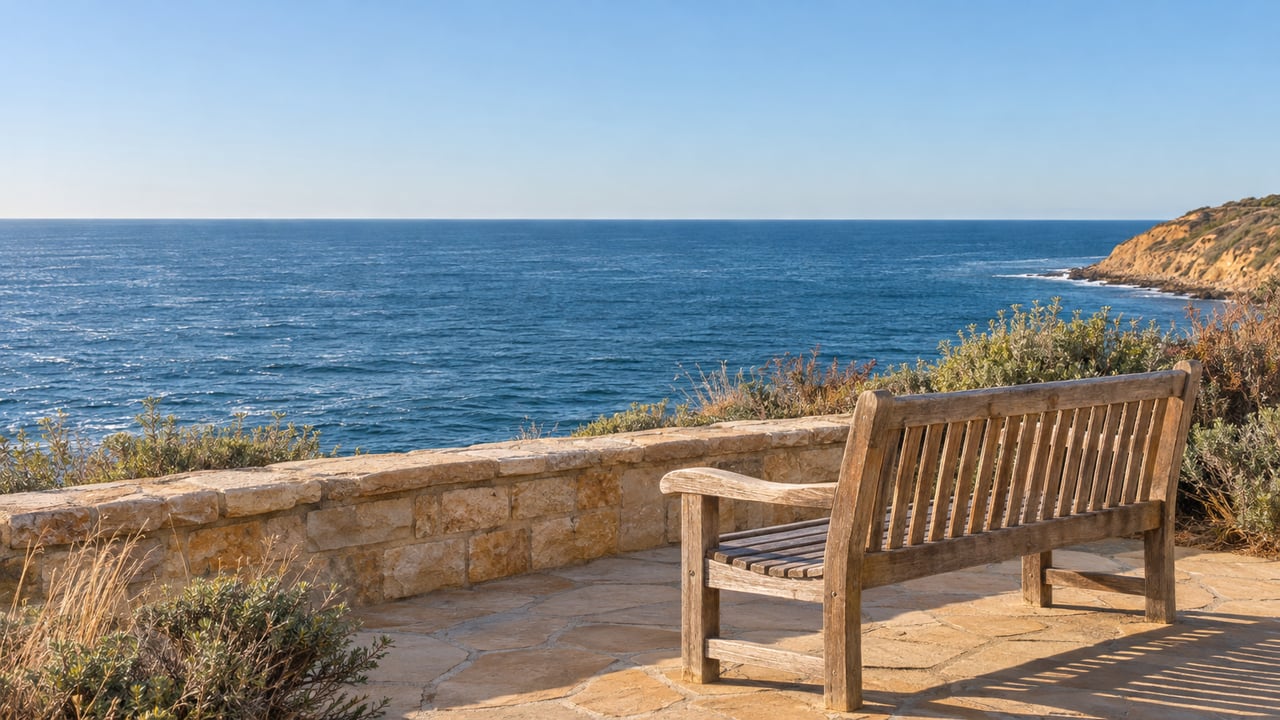
The census post sits on the PVIC back patio, 137 feet above the kelp beds and rocky shoreline. The sea floor drops off steeply close to shore there. Trained volunteers work with reticle binoculars, compasses and spotting scopes. They log identifications, behaviors and weather twice an hour. In the 2024-25 season, which ran from December 1, 2024 to May 25, 2025, 100 volunteers kept the post staffed for 2,013 hours across 173 days.
That season they counted 130 southbound gray whales and 485 northbound ones. For a baseline, the 2023-24 season produced 225 southbound and 579 northbound. Over the project's earlier seasons, southbound totals had ranged from 293 to 1,902, and northbound totals from 521 to 3,412. The calf figures fell further. The 2024-25 season had no southbound newborn calves at all, a first for the project, and 8 northbound calves. In 2023-24 there had been 22 southbound and 34 northbound.
Census director Alisa Schulman-Janiger's summary also notes many skinny gray whales. It calls the low totals and calf counts "very concerning."
Why NOAA's higher number comes with a caution
NOAA's July 15, 2026 feature gives the new estimate as a range of 15,930 to 20,530 whales. The previous year's range was 11,690 to 13,190, one of the lowest since counting began in the late 1960s. For a longer view, the population peaked at about 27,000 around 2015-16.
NOAA calls the increase welcome news and also raises questions about it. Its researchers say the increase likely exceeds what the population could produce through births. The agency's most recent calf production estimate, 85 calves in 2025, is the lowest on record. The agency is reexamining its assumptions about migration timing and whale behavior. It also reports that strandings over the past two years have climbed back into the general range of the 2019-2023 Unusual Mortality Event. Many of this spring's stranded whales were skinny or emaciated.
"We know that we don't see every whale," NOAA research scientist Aimee Lang said in the NOAA Fisheries feature. "One of the questions raised by our most recent count is whether we see a consistent proportion of the population every year, or whether other factors affect how much of the population we see and count."
Point Vicente is part of that question. ACS/LA says plainly that its post monitors the nearshore whales, and that most gray whales passing the peninsula take offshore routes. A shore count measures how many whales pass close enough to see from the cliff. It is not a population estimate, and it can rise or fall with visibility and with where the migration corridor sits that year. If the gray whales off California are swimming in different places or on a different schedule, a fixed patio watched every day for 41 seasons is one of the few places that would show it. In the 2024-25 summary, ACS/LA wondered whether a late southbound migration meant the whales were staying longer in northern feeding areas. The group also noted that late-season northbound whales may have come from the Gulf of California, where many grays were seen that year.
A season calendar from the 2024-25 count
The 2024-25 dates give a reasonable outline for planning visits this winter. Whales keep their own schedule, and ACS/LA's 2024-25 peak weeks moved from the year before, so treat these as a guide.
- December. The count opens. ACS/LA described the 2024-25 southbound migration as late, possibly because whales stayed longer in northern feeding areas.
- Late January. The 2024-25 southbound peak week was January 25 to 31, with 28 whales. The best single day was January 27, with 11, a record-low peak.
- Late February. The official turnaround, when the migration shifted from mostly southbound to mostly northbound, came on February 21 in both 2023-24 and 2024-25.
- Mid-March. The 2024-25 northbound peak week was March 15 to 21, with 96 whales, two weeks later than the season before. March 15 had 21 northbound grays. Northbound is when mothers and calves pass.
- Late May. The count closes. In 2024-25 the last whales came through in the final days of the season.
Plan for some days with no gray whales. In 2024-25 the patio recorded none on 50 of its 173 days, often in excellent sighting conditions. The same season's log includes blue, fin, humpback, minke and sperm whales. It also lists common dolphins, coastal and offshore bottlenose dolphins, Pacific white-sided and Risso's dolphins, California sea lions, harbor seals and an elephant seal. A morning with no grays can still turn up something else.
To check before you go, ACS/LA posts its daily counts and sighting details on its website and its Facebook page during the season. Volunteer teams include members of the general public, so a resident who keeps coming back to the patio could end up on the roster.
The interpretive center and the lighthouse next door
The Point Vicente Interpretive Center is the base for all of this. The City of Rancho Palos Verdes lists the museum and gift shop as open daily from 10 a.m. to 5 p.m., with donations accepted for the museum. The park grounds are open from dawn to dusk. The city also names Pelican Cove, between the Point Vicente Lighthouse and Terranea, as a whale-viewing spot. Anyone who read our piece on the peninsula's restaurants at Terranea already knows that stretch of coast.
The lighthouse just up the bluff turned 100 this year. According to the Daily Breeze, its first beam of light shone on April 14, 1926. The 67-foot tower stands above a 130-foot cliff and was added to the National Register of Historic Places on Halloween in 1980. The centennial was celebrated at the city's Whale of a Day event. That event was moved from April 11 to April 25, 2026 because of rain, and it included access to the lighthouse grounds.
The tower has been closed to the public since 2019 because of lead paint and asbestos, the Daily Breeze reported. Friends of the Point Vicente Lighthouse, formed in 2024 by peninsula residents Catherine Sincich, Amy Forte and Tisha Edge, is raising money to restore it and its support buildings. Forte is the group's current president. "It's old because it's good, and that's why it's still standing," Sincich told the Daily Breeze.
Coast Guard Auxiliary volunteers open the lighthouse grounds from 10 a.m. to 3 p.m. on the second Saturday of every month. During this whale season, those Saturdays fall on December 12, January 9, February 13 and March 13. March 13 sits just before the window where the 2024-25 northbound peak landed, so that morning you can walk the lighthouse grounds and then stop by the census patio.
Watching the next count
Whatever the patio records this winter will add one more season to a nearshore record that now runs past four decades. NOAA's scientists have said they are reexamining their assumptions about gray whale migration timing and behavior. At the end of the last season, the census team posed with a whiteboard showing its final counts on the PVIC patio. The daily numbers that lead to the next whiteboard will go up on the ACS/LA website as the season runs.
Part of living on the peninsula is knowing which Saturday the lighthouse grounds open and which week the whales turn north. If you're thinking about a home in Rancho Palos Verdes where the coast is part of your everyday routine, Christina Yelnick would love to help you find it. Let's connect.